
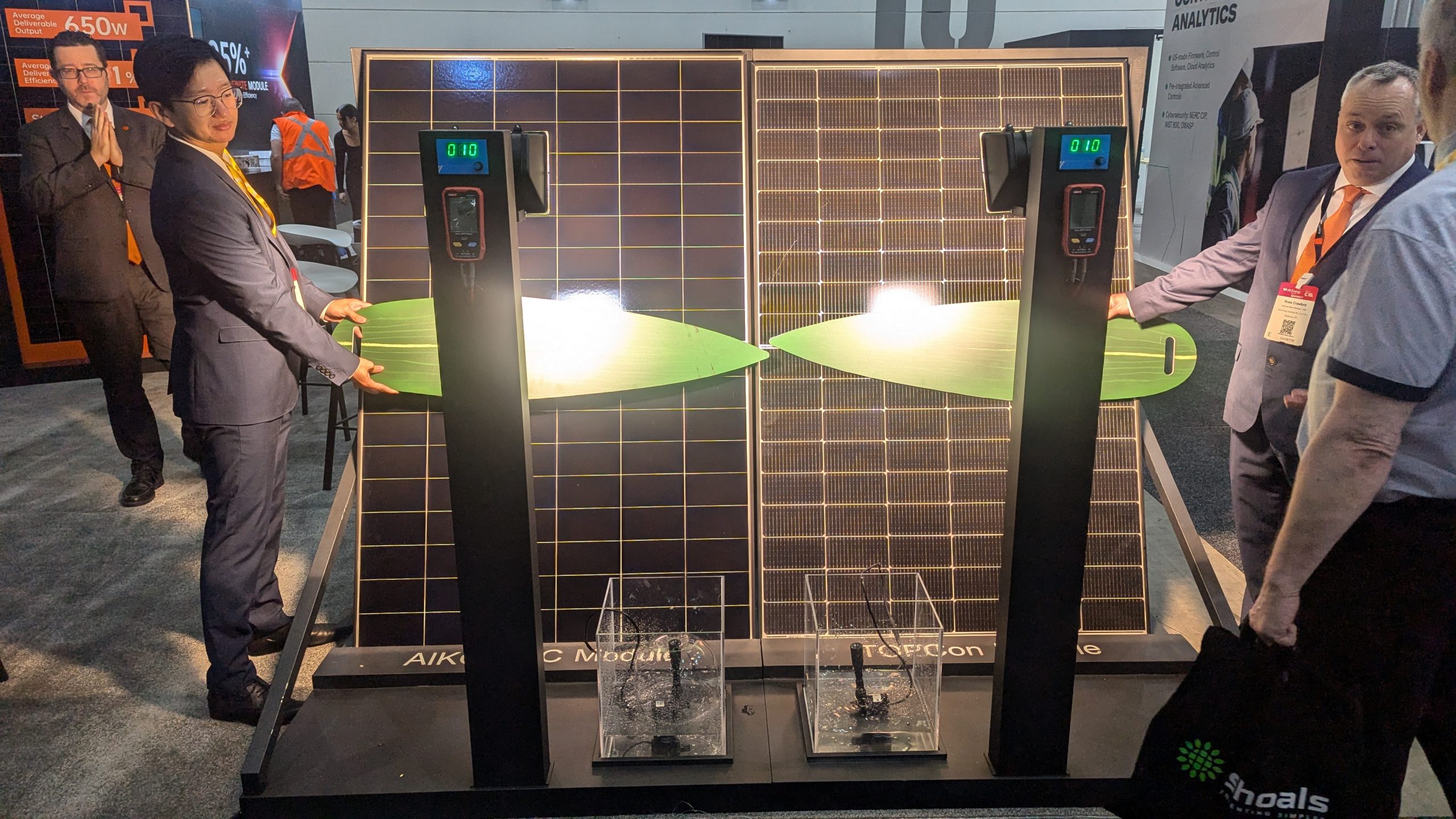
In the last six months, the solar energy industry has seen remarkable advancements across the globe — particularly in solar cell materials and photovoltaic efficiency. Chinese manufacturers and research institutes continue to play a dominant role, achieving world records in tandem and perovskite-based technologies. Meanwhile, universities and companies in Europe, the U.S., Japan, Korea, and Australia have contributed key innovations in flexible devices, organic materials, and stability-enhancing coatings.
This article summarises the most important recent developments, with a focus on new materials, record-breaking efficiency, and emerging commercial potential.
🔬 1. Global Advances in Materials
🌈 Perovskite and Tandem Technologies
- LONGi (China) reached a world record 34.85% efficiency for a perovskite/silicon tandem solar cell (certified by NREL, USA).
- JinkoSolar (China) hit 33.84% in a tandem design using TOPCon silicon.
- SolaEon (China) achieved 31.38% efficiency with an all-perovskite tandem.
- Qcells (Korea/Germany) demonstrated 28.6% on a full-size M10 commercial silicon-perovskite cell.
- Nanjing University (China) reported 29.1% on a perovskite-perovskite tandem (JET-certified).
🧪 Lead-Free and Flexible Materials
- University of Queensland (Australia): 16.65% efficiency in tin-based, lead-free perovskite — a record for this environmentally friendly material.
- Tokyo City University (Japan): Developed a flexible perovskite/silicon tandem with 26.5% efficiency, the highest ever for a bendable device.
- KIER (Korea): Created a 23.64% efficient flexible perovskite/CIGS tandem, showing high durability and lightweight potential.
- Ningbo Institute of Materials (China): Announced 19.51% certified efficiency in flexible perovskite modules using new π-extended SAM interfaces.
🧬 Organic and CIGS Combinations
- HZB + Humboldt (Germany): 24.6% efficiency in perovskite/CIGS thin-film tandem.
- University of Potsdam + CAS (Germany/China): 25.7% efficiency using a novel perovskite-organic tandem, with improved infrared absorption and low-temperature processing.
⚡ 2. Efficiency Records: Lab Cells and Commercial Progress
🥇 Record-Setting Cells
| Efficiency | Type | Organisation | Notes |
|---|---|---|---|
| 34.85% | Perovskite/Silicon Tandem | LONGi (China) | NREL-certified world record |
| 33.84% | Perovskite/Silicon Tandem | JinkoSolar (China) | Using n-type TOPCon |
| 31.38% | All-Perovskite Tandem | SolaEon (China) | Certified record in category |
| 29.1% | All-Perovskite Tandem | Nanjing Univ. (China) | JET-certified |
| 26.5% | Flexible Perovskite/Silicon Tandem | Tokyo City Univ. (Japan) | Best for bendable PV |
| 25.7% | Perovskite/Organic Tandem | Potsdam & CAS | Highest for perovskite-organic |
| 24.6% | Perovskite/CIGS Tandem | HZB (Germany) | Certified by Fraunhofer ISE |
| 23.64% | Flexible Perovskite/CIGS | KIER (Korea) | Lightweight, high-durability |
💡 Silicon Innovation Still Rising
- LONGi also set a 27.81% world record for single-junction monocrystalline silicon using HIBC technology.
- JA Solar achieved 26.07% on TOPCon cells with high Voc (748.6 mV).
- Trina Solar set a record 25.44% module efficiency for an n-type heterojunction panel, certified by Fraunhofer CalLab.
🧪 3. Coatings, Stability, and Surface Engineering
🧊 Stability Enhancements
- Northwestern University (USA) created a halide-blocking layer to improve perovskite longevity by preventing ion migration — a key cause of degradation.
- Chinese Academy of Sciences (CAS) achieved over 15% in CZTSSe thin-film cells using advanced selenization — a promising non-toxic, earth-abundant material class.
🧴 Advanced Coatings
- Anti-reflective nanostructures designed using AI (in global research) reduced reflectance to as low as 2% — improving photocurrent without extra layers.
- Suzhou Institute of Nano-Tech (China) achieved over 18% in inverted organic solar cells by introducing in-situ SiOxNy passivation — boosting both efficiency and durability.
🇨🇳 4. China’s Dominant Role in Solar R&D
In summary, China’s leadership is clear across both:
- Industry: LONGi, Jinko, Trina, and JA Solar now hold multiple world records.
- Research: Universities like Hainan, Nanjing, and institutes like CAS, NIMTE, and SINANO have delivered world-class advances in perovskite, thin-film, and flexible cells.
These developments are rapidly progressing toward mass production and commercial-scale deployment, particularly in tandem and perovskite-silicon hybrid modules.
📊 Summary Table
| Institution/Company | Technology Type | Efficiency Achieved | Notes |
|---|---|---|---|
| LONGi (China) | Perovskite/Silicon Tandem | 34.85% | World Record, NREL-certified |
| JinkoSolar (China) | Perovskite/Silicon Tandem | 33.84% | TOPCon-based tandem |
| Trina Solar (China) | HJT Panel (n-type) | 25.44% | Record module efficiency |
| JA Solar (China) | TOPCon Cell | 26.07% | High Voc (748.6 mV) |
| Nanjing Univ. (China) | All-Perovskite Tandem | 29.1% | JET certified |
| UQ (Australia) | Lead-free Tin Perovskite | 16.65% | Highest for non-toxic PV |
| Tokyo City Univ. | Flexible Tandem Cell | 26.5% | Best for bendable devices |
| HZB (Germany) | Perovskite/CIGS Tandem | 24.6% | Certified by Fraunhofer |
| SINANO (China) | Organic Cell (SiOxNy) | >18% | Inverted organic innovation |
🔮 Final Thoughts
Between material breakthroughs and record-setting efficiencies, solar energy is undergoing a rapid transformation. China’s solar R&D ecosystem, alongside global partners, is setting the pace. Expect the next wave of commercial solar panels — with 25–30% efficiency, flexible formats, and eco-friendly materials — to emerge within the next 1–2 years.